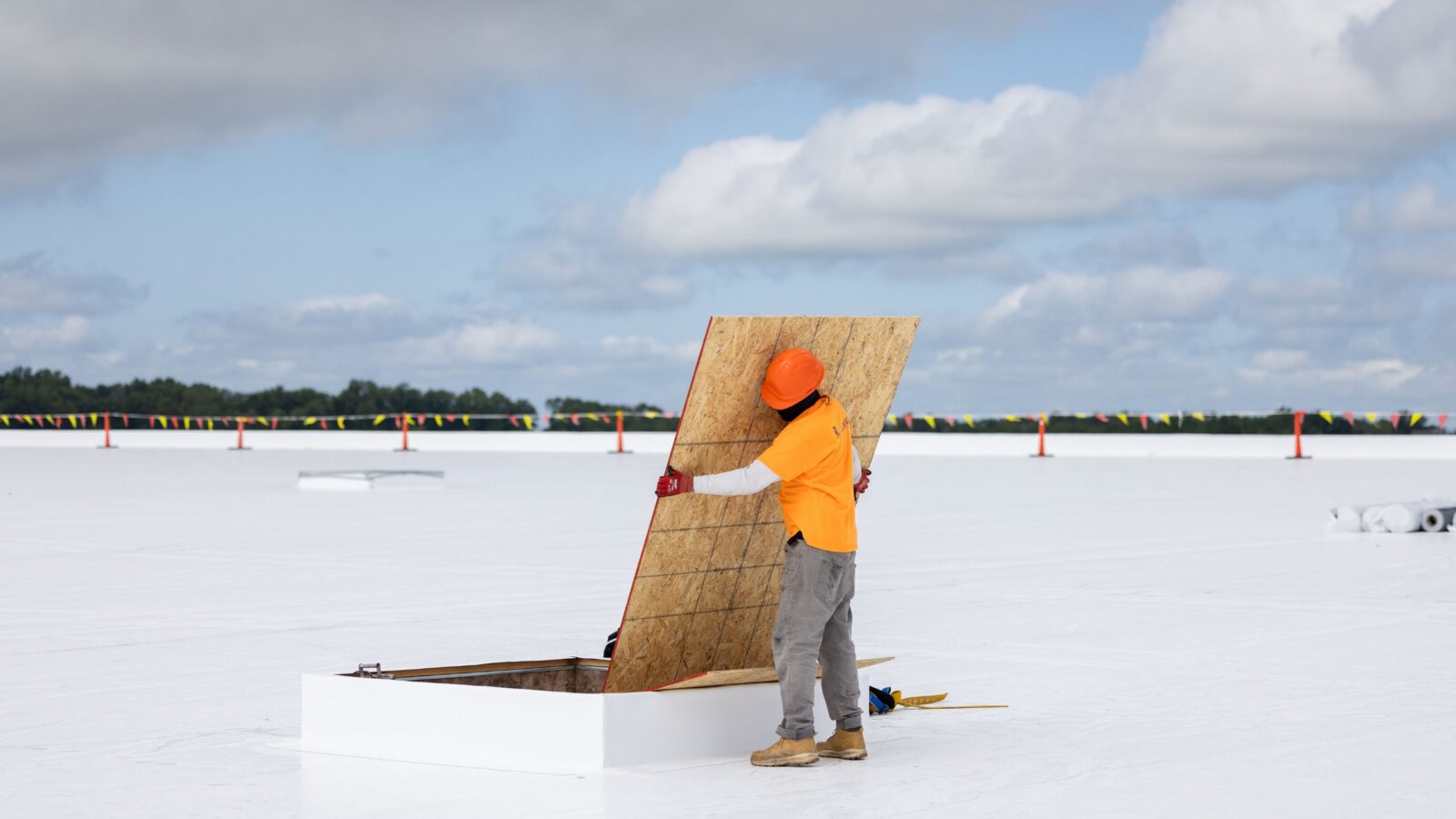


Here are some improper repairs we have come across recently. These examples are a good reminder that a repair has to match the existing roof system if it is going to perform the way it should.
1. EPDM Repaired With Asphalt Cement
When asphalt is applied to EPDM, the petroleum in the material starts breaking down the rubber compounds in the membrane. Once that happens, the membrane is compromised and the right fix is usually to cut the damaged section out and replace it.
The proper repair would have been much simpler: clean the area, prime it correctly, and install EPDM flashing membrane at the suspect laps.
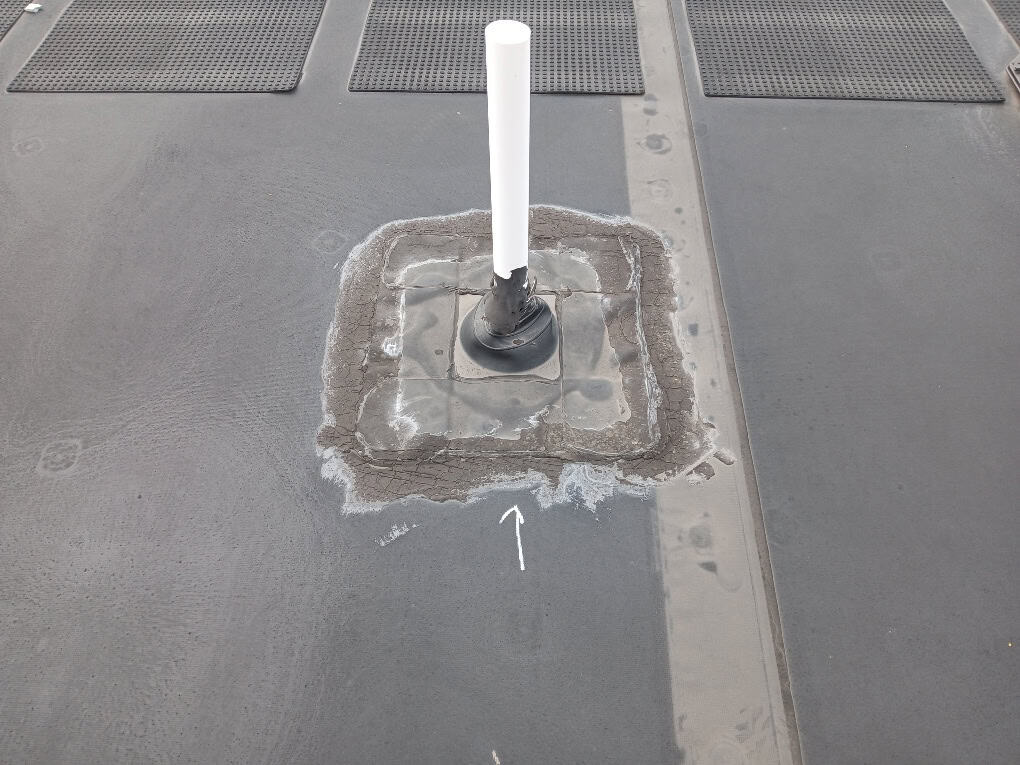
2. PMMA-Based Coating on EPDM
This one is not technically an improper repair, but it is hard to justify when a standard EPDM repair would have been more straightforward and likely less expensive. PMMA is a solid repair material, but it carries high VOCs, and once it is in place, future repairs usually mean adding more coating or cutting the whole area out and replacing it.
That may save money on the front end, but it can create a much more expensive repair later.
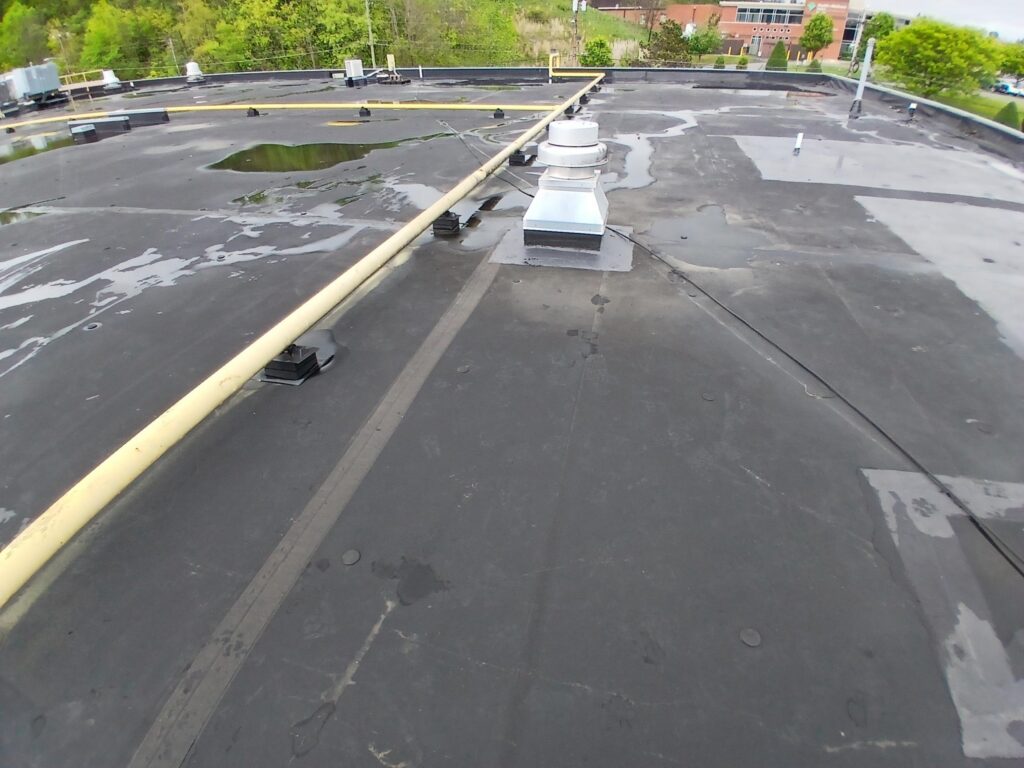
3. Asphalt on White TPO/PVC
Same issue as the first example, just on a white TPO/PVC roof. Asphalt and TPO/PVC do not belong together. Once asphalt is used on this kind of membrane, the repair itself can create the next failure.
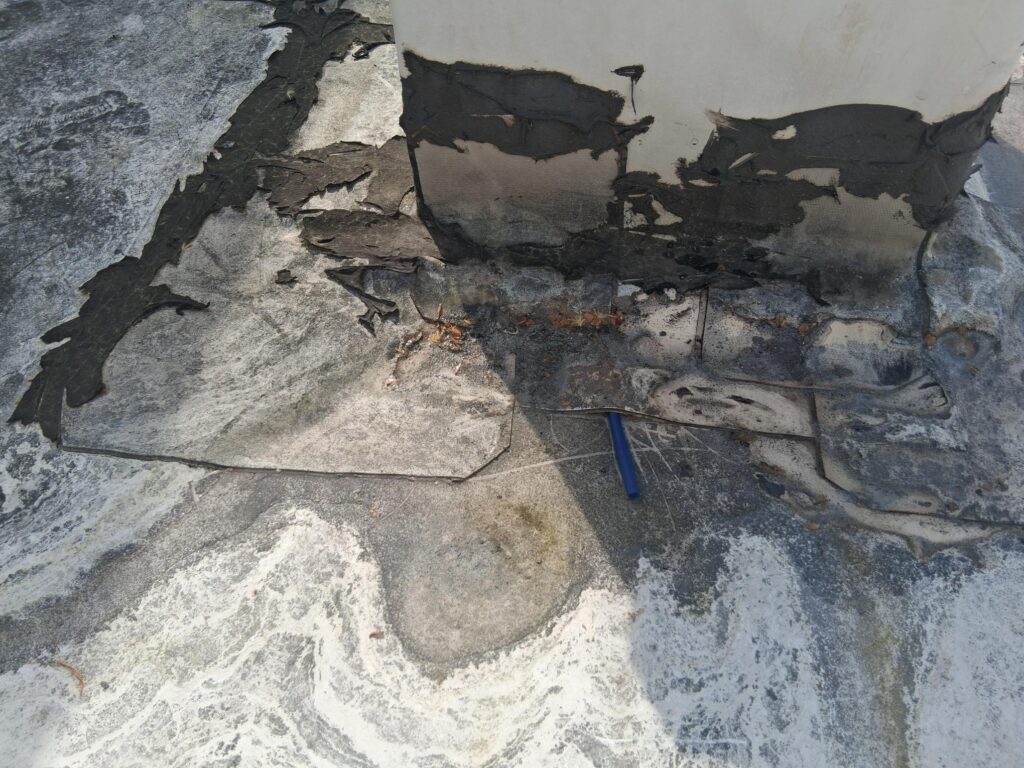
4. EPDM on PVC Covered With Elastomeric Coating
This is the kind of patchwork repair that throws everything at a leak and still does not solve the problem. Repairs should be made with compatible materials. In this case, the proper fix would have been to weld a PVC patch in place.
Instead, the area now has to be cut out and repaired correctly.
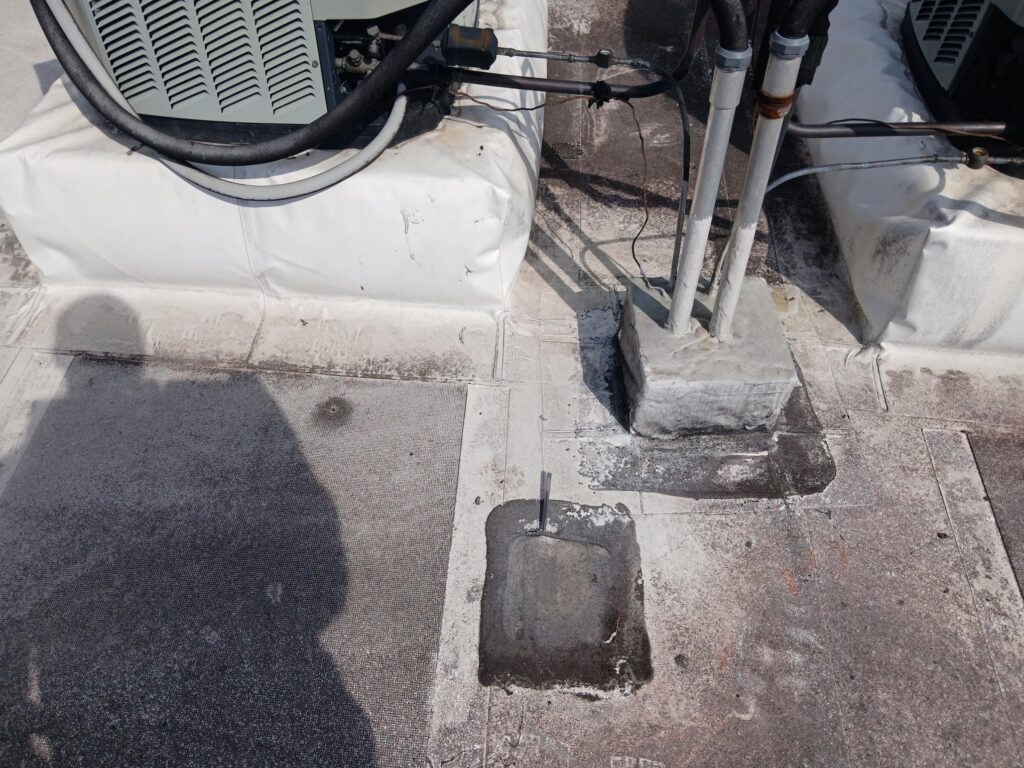
5. Concrete on a Failed Expansion Joint on a Built-Up Roof
The proper repair would be to clear the area, prime it, apply asphalt cement, and install new membrane into the cement. Concrete was absolutely the wrong material for this repair.
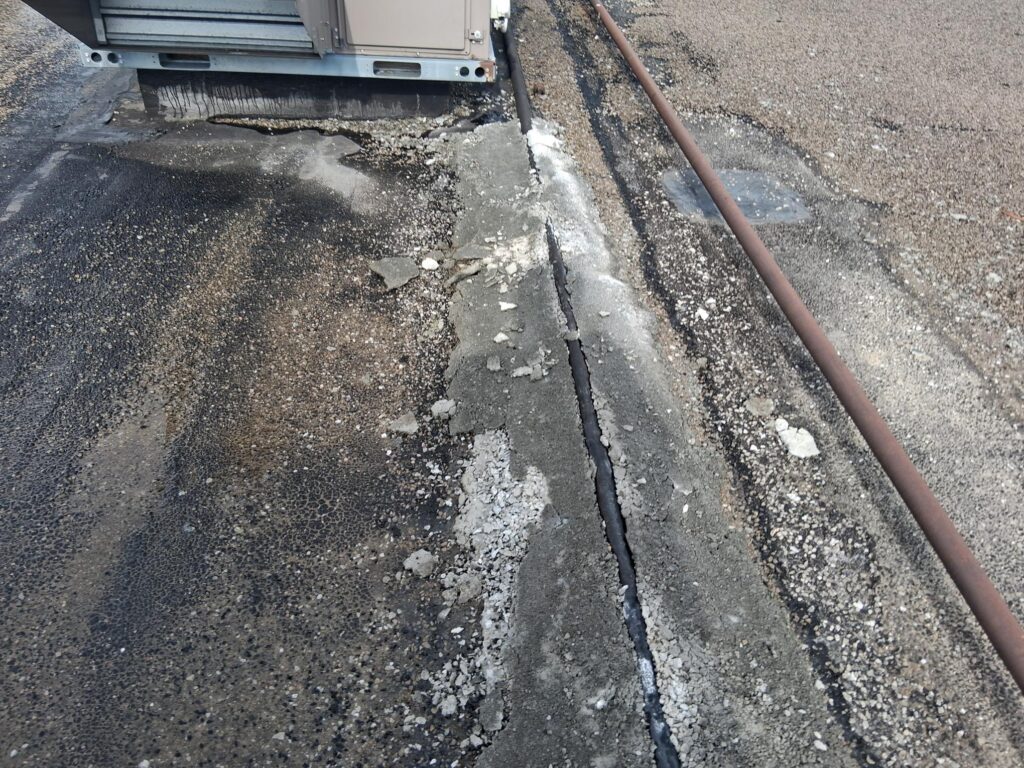
6. Generic Coating on a Built-Up Roof
This one is not technically an improper repair, but it was executed very poorly. The repair was meant to seal a drain, but instead it lifted the drain roughly an inch above the roof surface and created a condition where water can run underneath it during a rain event.
This roof had already been coated, and coated roofs generally need to be repaired with compatible coating systems. There are good ways to do that, but this was not one of them. The existing drain flashing should have been cut out, new modified membrane installed and tied into the existing membrane where there is no coating, then finished with silicone coating before reinstalling the drain flange.
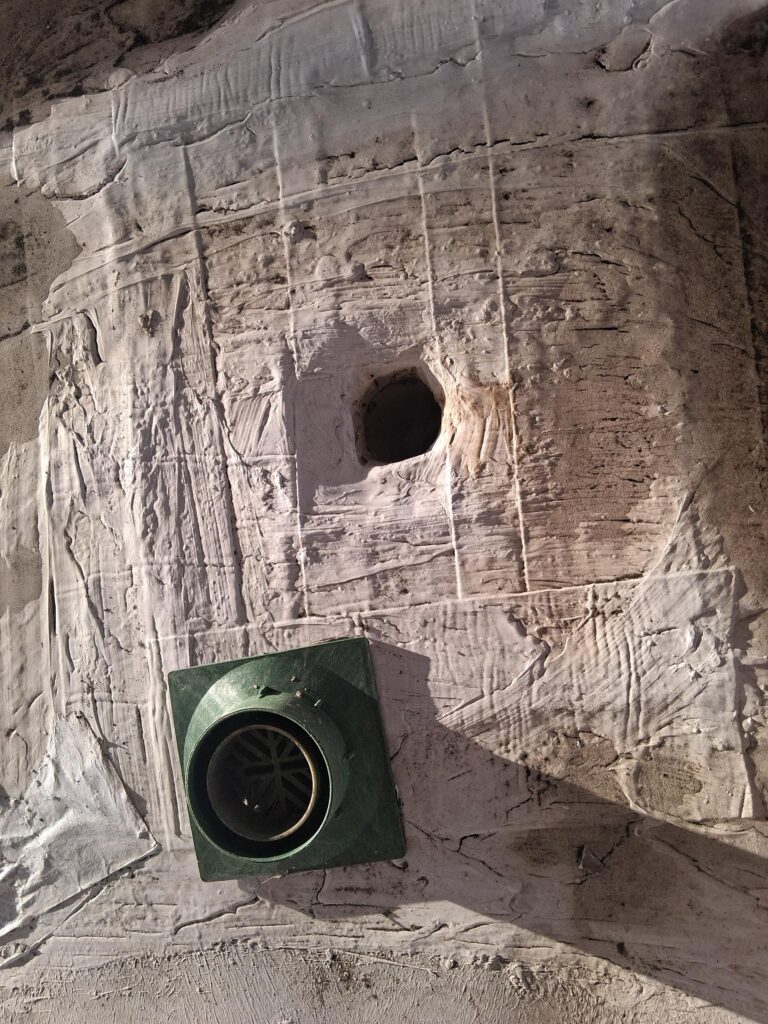
7. Membrane Terminated Over Existing Clay Coping
In this case, the membrane was terminated directly onto the existing clay coping, fragmenting the clay coping, creating an overhead impact hazard for pedestrians below while also allowing water to infiltrate the building envelope.
The proper repair would have been to remove the existing coping, extend the membrane over the top of the parapet wall, and properly terminate it before reinstalling or replacing the coping. When membrane terminations are not properly installed, wind and weather can quickly turn a repair into another failure point and jeopardize pedestrian safety.


8. Improperly Installed and Undersized Penetrations
The roof penetrations on this project were installed too low and were not properly suited for the conditions they were intended to withstand. Low penetrations can allow water, ice and snow to reach areas that should remain protected. This can expose MEP (Mechanical, electrical, and plumbing) equipment to water damage, damage structural framework, and compromise the integrity of the roof system.
Penetration height is an important consideration, particularly in areas exposed to snow and rain. Properly designed and installed curbs and penetrations should meet applicable building codes, manufacturer requirements, and project specifications to help prevent water intrusion and other hazards.

9. Insufficient Membrane at Field Wraps
Every field wrap observed on this roof had less than one inch of membrane extending onto the roof surface. That is well below the manufacturer’s specified minimum of 1 ½” inches.
Proper membrane overlap is critical to creating a secure, watertight repair. When there is not enough membrane extending onto the roof surface, there simply isn’t enough material to create the proper seal. What may look like a completed repair can quickly become another source of leaks and deterioration.

Roofing is simple.
Most construction is simple. There are basic rules to follow, and one of the biggest is this: a repair can only be as good as the structure it is tied into. If the foundation is not sound, you are just spending money without solving the real problem.
It is no different than putting high-performance tires on a car with a bad suspension, repainting a house with rotten siding, or installing a new roof on a building that still has underlying failures. The repair might look finished for a while, but it is not built on something dependable.
That is why regular roof inspections matter so much, and why it matters who you trust to do them. Early intervention can extend the life of a roof significantly, regardless of the region or roof type.
We do a lot of work correcting what fly-by-night roofers leave behind, and that damage costs building owners real money. Roofing is an art. It just depends on who has the brush.