

When severe weather moves through, the first signs of roof damage may show up inside the building before anyone knows what happened on the roof.
If water is coming in, speed matters. So does the information you can give your roofing contractor.
The first steps are straightforward: document where the water is appearing, make sure your roofing team can access the roof, and report the issue as soon as possible. Once the immediate problem is under control, a professional inspection can help determine what happened and what needs to be addressed next.
Report leaks as soon as you see them
The sooner your roofing contractor knows about a leak, the sooner the investigation can begin.
When you report the problem, be as specific as possible about what is happening inside the building.
Note:
- Where the water first appeared
- When the leak started
- Whether it happened during heavy rain
- Whether wind seemed to affect the leak
- Whether the same area has leaked before
- Whether there are multiple leak locations
Those details can make a roof investigation much more efficient.
If several leaks appear after the same storm, do not assume they all have the same source. Water can enter a roofing system in different places, and separate interior leaks may require separate investigations.
Make sure the roof can be accessed
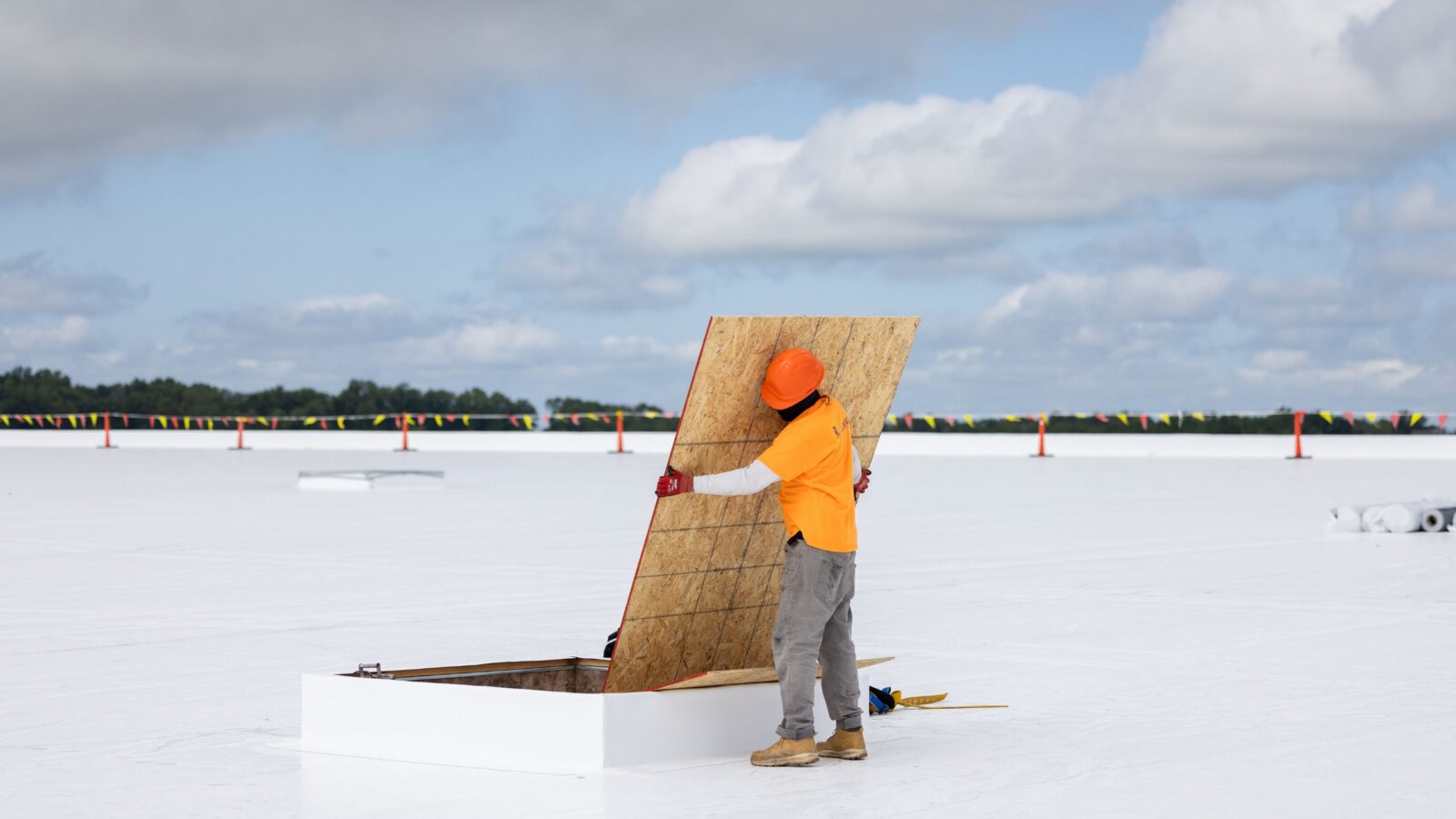
One of the simplest ways to prevent delays is to make sure someone can provide roof access when service technicians arrive.
For facilities that may need after-hours emergency service, determine ahead of time who has keys, access codes, or authorization to open the roof.
Waiting for roof access can sometimes delay the response longer than the repair itself.
Do not assume the storm caused every problem
A leak that appears during a storm may be related to the roof, but the source still needs to be confirmed.
Roofing professionals can investigate the roof system and surrounding conditions to determine where water is entering. In some cases, equipment, penetrations, or other building components may contribute to the issue.
The goal is to identify the actual source before moving forward with repairs.

Schedule a professional inspection
Even when a storm does not produce an obvious leak, it may still be worth having the roof inspected after severe weather.
A professional can look for developing issues that may not be visible from inside the building, including damage that could become a larger problem during the next weather event.
For commercial property owners and facility managers, annual or biannual inspections are one of the most useful tools for understanding roof condition over time.
Major roofing manufacturers commonly recommend regular inspections and maintenance. Many commercial roof warranties also include maintenance requirements, so property teams should review their specific warranty and make sure those requirements are being met.
The best storm preparation happens before the storm
Preventative maintenance is one of the most effective ways to prepare a commercial roof for severe weather.
When a roofing professional sees the roof regularly, small problems can often be identified before they turn into leaks, interior damage, or emergency service calls.
Ideally, the property is already on an annual or biannual inspection schedule. If it is not, scheduling an inspection before hurricane season or another period of severe weather can provide a clearer picture of the roof’s condition before storms arrive.
Timing inspections after harsh weather seasons can also help uncover damage and maintenance needs that developed over the previous months.
Keep good roof records
Roof history matters when technicians are trying to diagnose a problem.
Keep warranty documents, previous service reports, inspection findings, and repair history somewhere your facility team can access quickly.
If the same area has leaked before, that information may help your roofing contractor identify patterns and avoid starting the investigation from scratch.
A better approach to storm preparedness
Storm response should not begin with the first leak.
A consistent commercial roof maintenance plan gives facility teams a better understanding of roof conditions before severe weather arrives and a clearer path forward when problems occur.
Jolly Roofing works with commercial property owners and facility teams on inspections, preventative maintenance, repairs, and ongoing roof management through RoofSecure.
When the next major storm arrives, knowing the condition of the roof and knowing who to call can make the response much easier.
Frequently Asked Questions
Should a commercial roof be inspected after a major storm?
A professional inspection may be appropriate after severe weather, particularly when there are leaks, visible damage, or concerns about roof condition. Regular inspections can also help identify problems before the next storm.
How often should a commercial roof be inspected?
Annual or biannual inspections are commonly recommended for commercial roofing systems. The appropriate schedule can depend on the roof system, warranty requirements, building conditions, and local weather.
What information should I provide when reporting a roof leak?
Tell your roofing contractor where the water first appeared, when it started, what the weather was doing at the time, whether the area has leaked before, and whether there are multiple leak locations.